Showing posts with label NCKU. Show all posts

Monday, June 10, 2013

Common Kingfishers at NCKU


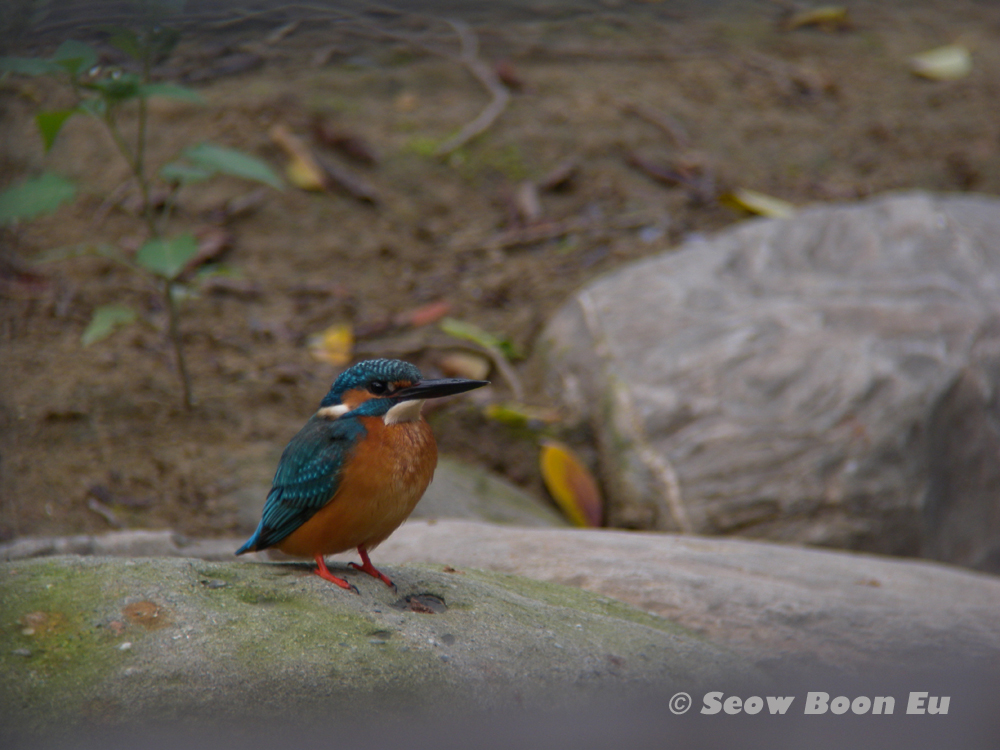
Today (4-15-2013), I spotted a pair of Common Kingfisher (Alcedo atthis 翠鳥) at NCKU (National Cheng Kung University) in Tainan, Taiwan. (click on the picture to enlarge)


A female Common Kingfisher with the reddish lower mandible.

A male Common Kingfisher with the dark lower mandible.


Happy Birding.

Daurian Redstart at NCKU

In the last spring (10 March 2013), I sighted this beautiful migratory bird which has an attractive orangy plumage and silvery crown. Daurian Redstart (Phoenicurus auroreus) is an uncommon spring visitor at NCKU (National Cheng Kung University) in Tainan.

Front View

Side View
Happy Birding

Black Bulbul at NCKU

In last winter (16-Jan-2013), I sighted huge flock of Black Bulbul (Hypsipetes leucocephalus) foraging and competing for food on most of the fruiting bayan trees at NCKU (National Cheng Kung University) in Tainan. There are two species of bulbuls can be sighted at NCKU, the Black Bulbul and the Chinese Bulbul. Chinese Bulbul is a common resident in the campus, while the Black Bulbul is the winter visitor.

Black Bulbul

Chinese Bulbul
 Happy Birding

Brown-headed Thrush at NCKU

In last winter (16-Jan-2013), I sighted more than 10 of this smart and beautiful Brown-headed Thrush (Turdus chrysolaus) at NCKU (National Cheng Kung University) in Tainan. It was my lifer.


Happy Birding

Saturday, June 23, 2012

Empty Nest

On 21st June, the nest was emptied after the typhoon. I searched around the NCKU campus with the hope to see the fledglings and adults again, but I didn't find any of them. However. I was lucky to find this precious adult feather of the Malayan Night Heron under one of the empty nests.


From my weekly observations, the complete nesting period from hatchling to fledgling is about 4 to 5 weeks.

Click HERE to read my previous report about the hatchings/fledglings of the Malayan Night Heron.

Happy Birding. Keep Watching, Keep Listening and Keep Exploring.

Friday, June 15, 2012

Two Chicks Left the Nest

On 15 June, I went back again to check the nest. I noticed two chicks had left the nest but prefer to perch on the nearby branches, and one chick still resided inside the nest. Besides that, the white feathers on their head were also less noticeable. At this moment, only one adult was still around and actively foraging on the nearby ground, the feeding session has also less frequent.


Click HERE to read the previous report about the hatchings of the Malayan Night Heron.

Happy Birding. Keep Watching, Keep Listening and Keep Exploring.

Tuesday, June 12, 2012

Grey Treepie Feeding on Cicada

On 10-June, I spotted a Grey Treepie (Dendrocitta formosae formosae, 樹鵲 ) feeding on a cicada at NCKU (National Cheng Kung University) in Tainan.

Grey Treepie is an endemic sub-species in Taiwan. The cicada is identified as Cryptotympana atrata  (紅脈熊蟬).

Grey Treepie feeding on cicada (click on the pictures to enlarge)

Remaining parts of the Cicada, the wings and abdomen shell.

Happy Birding. Keep Watching, Keep Listening and Keep Exploring.

Sunday, June 10, 2012

Parents Left the Nest

On 10 June, I went back to observe the nest, I noticed the parents had left the nest and were foraging on the nearby ground, but occasionally one of them would fly back to the nest to feed the chicks. 


All three chicks had grown stronger and bigger with the distinguishable white feathers on their head. I also noticed one of the chicks had started leaving the nest and perched on the nearby branch, the other two chicks still resided inside the nest.


Click HERE to read the previous report about the hatchlings of the Malayan Night Heron.

Happy Birding. Keep Watching, Keep Listening and Keep Exploring.

Sunday, April 1, 2012

Crested Goshawk Guarding Its Nest.

Today, I spotted a male Crested Goshawk in NCKU, perching on a tree branch and seriously guarding its nest with one of its legs hiding inside its belly feathers. The breeding plumage is pale and grayish in color, especially the grayish head plumage.

glimpsed at me....
then, turned its head, starring at the nest, 
and ignored me.

Click HERE to view my last year pictures of Crested Goshawk.

Thursday, March 29, 2012

White Wagtail at NCKU, Tainan.

White Wagtail (Motacilla alba, 白鶺鴒) was my lifer on 24 December, 2010 in Tainan, Taiwan. 


28 March, 2012 was a fortunate date for me to digiscope this beautiful bird at NCKU (National Cheng Kung University) in Tainan City. There were three of them foraging food on the ground, two adults and one juvenile with the summer plumage, the juvenile was very shy and hard to approach nearer.

All pictures shown in this write-up are the adult with summer plumage. (click on the picture for enlarged view)


Keep Watching, Keep Listening and Keep Exploring.

Video clip of White Wagtail, digiscoped by Steen Heilesen:


Monday, May 16, 2011

Immature Malayan Night Herons at NCKU

The highest number of Malayan Night Herons at NCKU that I have counted in the month of May on a single day was eight birds, three adults and five immatures.

Here in my blog, I would like to share some of my digiscoped pictures with their beautiful immatured plumage (click on the picture for the enlarged view).

Immature with more brownish plumage

Beautiful immatured crest with black and white spot

Another immature with lesser brownish plumage

Ha ha, this one is smart, actually is peeping at me.

More, click HERE to view the adult Malayan Night Herons in NCKU.
and click HERE to listen to their call which was recorded at night in NCKU.

Happy Birding.
Boon Eu.

Saturday, May 7, 2011

Brown Shrike at NCKU.

Today, I went to check the Malayan Night Herons in NCKU, surprisingly I saw many immature Malayan Night Herons there in the campuses. Since April, the highest number of Malayan Night Heron at NCKU that I have counted in a day was 8 birds, 3 adults and 5 immatures. I noticed many immatures have been arrived in the campus and competing for the feeding ground with the resident adults.

After the count, I saw a Brown Shrike (Lanius cristatus) actively searching for prey on one of the trees near to the library. Here is the digiscoped picture of the shrike, (click on the picture for the enlarged view):


Happy Birding.

Monday, March 28, 2011

Recorded Call of the Malayan Night-heron

Today, at around 8.00 pm, I was lucky to hear and to record the call of the Malayan Night-heron at  NCKU (National Cheng Kung University) in Tainan, Taiwan. The call is loud, continuous for about 15 seconds, the interval for each repeated call is approximately 30 seconds.

This is my first recorded Malayan Night-heron's call. Let's plug in the earphone, click on the play button and enjoy listening to the call.

Warning: this recorded call is for identification purpose only, do not use this as a bird call playback. Click HERE to learn more.

Click HERE to read about the Malayan Night Herons in NCKU.

28-3-2011.
Boon Eu

Saturday, March 26, 2011

Taiwan Barbet at NCKU, Tainan.

Taiwan Barbet (Megalaima nuchalis) is a beautiful bird with the most colorful and decorative face in Taiwan. Taiwan Barbet is known as Wuseniao (五色鳥), literally means "5-color bird" in Chinese, it is an endemic species and also the only barbet species exists in Taiwan.

The birds are currently very active at NCKU (National Cheng Kung University) in Tainan, it can easily be seen in most of the fruiting trees in the campus. The bird call is usually loud, easily be heard and distinguished

Let's appreciate the beauty of this bird, as well as to preserve and protect their habitats in NCKU campuses.

(click on the picture to enlarge)


26-March-2011
Boon Eu

Wednesday, March 16, 2011

A Pair of Crested Goshawk at NCKU

Last weekend, I was lucky to spot a pair of Crested Goshawk (Accipiter trivirgatus, 鳳頭蒼鷹) at NCKU (National Cheng Kung University) in Tainan, Taiwan. It was my first experience of spotting a pair of Crested Goshawk. 

It's an opportunity for me to learn how to distinguish the male and the female Crested Goshawk in the field. I learned that the size of the female Crested Goshawk is larger as compared to the male. From my observation and comparison through the digiscoped pictures and field book, I noticed the male has smaller body size as compared to the female, it has shorter crest and round head. The male has distinctive yellowish lines near the nostril and the upper beak. 

Let's take a closer look at the pictures of the pair.

The male:

and the female:


Besides that, I also heard the call that I have never heard of : "chiup.. chiup..chiup", an alarm call from one of them when I was trying to approach nearer.


Boon Eu, 16-March-2011, Tainan, Taiwan.

Wednesday, March 9, 2011

A Pair of Malayan Night Heron at NCKU. Part-2.

This morning, I went back to the place where I saw a pair of Malayan Night Heron (Gorsachius melanolophus, 黑冠麻鷺) at NCKU (National Cheng Kung University) in Tainan, Taiwan. It was my first experience seeing a pair of Malayan Night Heron perched on a mango tree.

From my observation, I would like to confirm that these two Malayan Night Herons are the breeding pair, because both were roosted side by side on the same branch. I believe the male has bluish lores (the space between the eye and bill) and striking plumage as compared to the female. 

The front view

The rear view, the male is bigger in size.

Handsome male with striking plumage and bluish lores (left), female with less striking plumage and grayish lores (right).


Click HERE to read the part-1 of this blog.
Or click HERE to view the immature Malayan Night Herons at NCKU.

Boon Eu, 9-March-2011, Tainan, Taiwan.


Tuesday, March 8, 2011

A Pair of Malayan Night Heron at NCKU

Today, I was so excited to see a pair of Malayan Night Heron at NCKU (National Cheng Kung University) in Tainan, Taiwan. It was my first experience of seeing a pair of Malayan Night Heron feeding on the same ground and territory.


But, I have a problem to distinguish the male and the female, I can't even find a good and detailed reference about the differences. However, I noticed one of the birds has very bright blue lores (the space between the eye and bill) and striking plumage as compared to the another one. I strongly believe that the one with the brighter color on the lores and striking plumage is the male, while the other one with the pale lores and plumage must be the female.


or could it be an adult with the striking lores and the immature with pale lores? I believe these birds are territorial birds, then why both can feed on the same ground if they are not a breeding pair?


Click HERE to view the Part-2 of this blog.
and click HERE to listen to their call which was recorded at night at NCKU.

View my other blogs about the Malayan Night Heron:
Malayan Night Herons in northern part of Taiwan
Juvenile Malayan Night Heron spotted in Singapore Botanic Gardens


Boon Eu, 7-March-2011, Tainan, Taiwan.